Learn how to identify HVAC thermostat problems and understand when professional service restores proper climate control.
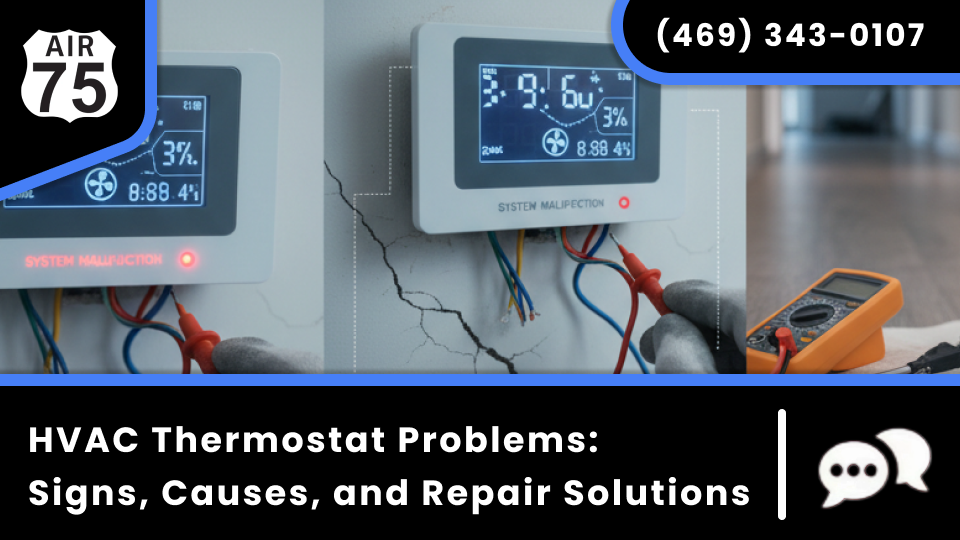
Is your HVAC system ignoring temperature settings or cycling erratically? HVAC thermostat problems disrupt home comfort and waste energy when your system can’t respond to commands properly. When thermostat issues develop, your heating and cooling equipment may run constantly, short cycle, or fail to activate entirely. A thermostat not working correctly causes uncomfortable temperatures and increased utility bills. Thermostat malfunction can stem from dead batteries, wiring problems, or internal component failures. Professional thermostat repair diagnoses these issues and restores proper communication with your HVAC system. Quality thermostat fix work ensures accurate temperature control throughout your home. When repair isn’t feasible, thermostat replacement provides an opportunity to upgrade. Modern thermostat installation offers improved efficiency and smart features. If troubleshooting doesn’t resolve your issue, scheduling thermostat repair near you restores reliable climate control.
Understanding HVAC Thermostats
Before exploring HVAC thermostat problems, understanding how thermostats function helps homeowners troubleshoot effectively.
How Thermostats Work
Thermostats serve as the control center for your HVAC system. They monitor room temperature continuously using internal sensors. When temperature differs from your setting, the thermostat signals your equipment.
This communication requires proper wiring, power supply, and functioning components. Any disruption in this chain causes thermostat issues affecting your entire system.
Types of Thermostats
Different thermostat styles offer varying features:
| Thermostat Type | Features | Complexity |
|---|---|---|
| Manual | Basic temperature dial | Simple |
| Programmable | Scheduled temperature changes | Moderate |
| Smart | WiFi, learning, remote access | Advanced |
| Zoned | Multiple area control | Complex |
According to the U.S. Department of Energy, proper thermostat function can save 10% annually on heating and cooling costs.
Signs of Thermostat Not Working
Recognizing thermostat not working situations helps you respond appropriately. Watch for these symptoms throughout your home.
HVAC Thermostat Problems: Blank Display
No display indicates power problems. The screen shows nothing when you approach. Buttons don’t respond to pressing. Backlight doesn’t illuminate. This confirms thermostat malfunction requiring immediate attention.
Thermostat Issues: Wrong Temperature Reading
The displayed temperature doesn’t match actual room temperature. Your thermometer shows different readings than the thermostat. The difference is significant, not just a degree or two. Inaccurate sensing causes improper HVAC operation and thermostat issues.
Thermostat Not Working: System Won’t Respond
Your HVAC equipment ignores thermostat commands completely. Adjusting temperature produces no response. Neither heating nor cooling activates. The system seems disconnected from thermostat control. Complete unresponsiveness indicates serious HVAC thermostat problems.
Thermostat Malfunction: Short Cycling
Your system turns on and off rapidly. Cycles last only minutes instead of proper duration. Equipment never reaches set temperature. Constant starting and stopping wastes energy. Short cycling often stems from thermostat malfunction rather than equipment problems.
HVAC Thermostat Problems: Uneven Temperatures
Some rooms are comfortable while others aren’t. Temperature varies significantly throughout your home. The thermostat location may be affecting readings. Uneven comfort suggests thermostat issues with sensing or placement.
Common Causes of HVAC Thermostat Problems
Understanding what causes HVAC thermostat problems guides your troubleshooting efforts effectively.
Thermostat Issues: Dead Batteries
Many thermostats rely on battery power. Batteries typically last 6-12 months. Low batteries cause erratic behavior before complete failure. Some thermostats display low battery warnings. Dead batteries represent the most common cause of thermostat not working situations.
HVAC Thermostat Problems: Wiring Issues
Electrical connections can fail over time. Wires loosen from vibration or temperature cycling. Corrosion develops on terminals. Rodents sometimes damage wiring. Wiring problems cause intermittent or complete thermostat malfunction.
Thermostat Not Working: Dirt and Dust
Internal contamination affects operation. Dust accumulates inside thermostat housing. Dirt interferes with mechanical components. Sensors become coated and inaccurate. Contamination creates progressive thermostat issues over time.
Thermostat Malfunction: Poor Placement
Location affects thermostat accuracy significantly. Direct sunlight causes false high readings. Drafts from vents create temperature fluctuations. Proximity to heat sources skews measurements. Poor placement causes chronic HVAC thermostat problems.
Age and Wear
Thermostats don’t last forever. Electronic components degrade over time. Mechanical parts wear from use. Technology becomes outdated. Average thermostat lifespan is 10-15 years. Aging naturally leads to thermostat malfunction.
DIY Thermostat Fix Solutions
Before calling professionals, try these thermostat fix steps to resolve common problems.
Thermostat Fix: Replace Batteries
Start with the simplest solution:
- Locate battery compartment on thermostat
- Note battery type before removing
- Install fresh quality batteries
- Reset thermostat if prompted
- Test system operation immediately
New batteries resolve many thermostat not working situations quickly.
Thermostat Fix: Clean the Unit
Remove contamination affecting operation:
- Turn off HVAC system at breaker
- Remove thermostat cover carefully
- Use soft brush to remove dust
- Clean contacts with electronic cleaner
- Reassemble and test operation
Cleaning addresses thermostat issues caused by dirt buildup.
Thermostat Repair: Check Wiring
Inspect visible electrical connections:
- Turn off power to HVAC system
- Remove thermostat from wall plate
- Check wire connections are secure
- Look for obvious damage or corrosion
- Tighten any loose connections
- Restore power and test
Loose wiring causes many HVAC thermostat problems that are easily fixed.
Thermostat Fix: Verify Settings
Confirm proper thermostat configuration:
- Check heating/cooling mode selection
- Verify fan setting (auto vs on)
- Confirm temperature setpoint
- Review programmed schedule if applicable
- Reset to factory defaults if needed
Incorrect settings mimic thermostat malfunction symptoms.
Thermostat Repair: Level the Unit
Ensure proper mounting position:
- Some older thermostats require level mounting
- Use level to check position
- Adjust mounting if needed
- Verify mercury switch function if applicable
- Test operation after adjustment
When Thermostat Replacement Is Needed
Sometimes thermostat repair isn’t possible and replacement becomes the best option.
Signs You Need Thermostat Replacement
Replace your thermostat when:
- Unit is more than 15 years old
- Repeated repairs haven’t resolved problems
- Display is damaged or unreadable
- Internal components have failed
- Upgrading to smart features desired
- Current thermostat incompatible with new HVAC
These conditions indicate thermostat replacement provides better value than continued repair.
Thermostat Installation Options
Modern replacement choices include:
| Type | Benefits | Best For |
|---|---|---|
| Basic programmable | Scheduled comfort, affordable | Budget-conscious |
| Smart thermostat | Learning, remote access, energy reports | Tech-savvy homeowners |
| Touchscreen | Easy interface, modern appearance | User-friendly preference |
| Zoned compatible | Multi-area control | Larger homes |
Professional thermostat installation ensures proper wiring and configuration.
Thermostat Installation Considerations
Proper replacement involves:
- Selecting compatible thermostat for your system
- Verifying wiring compatibility
- Installing at appropriate location
- Programming for your schedule
- Connecting to WiFi if applicable
- Testing all functions thoroughly
Quality thermostat installation maximizes new thermostat benefits.
Advanced Thermostat Issues
Some thermostat issues involve complex causes requiring professional diagnosis.
HVAC Thermostat Problems: Compatibility Issues
Not all thermostats work with all systems. Heat pumps require specific thermostat types. Zoned systems need compatible controls. Older wiring may not support modern thermostats. Compatibility problems require professional thermostat repair assessment.
Thermostat Malfunction: Sensor Failure
Internal sensors can fail independently. Temperature sensing becomes inaccurate. Anticipator settings may be incorrect. Sensor replacement may be possible. Severe sensor failure typically requires thermostat replacement.
Thermostat Issues: Communication Problems
Modern systems use digital communication. Signal interference affects smart thermostats. WiFi connectivity issues cause remote access problems. System communication failures prevent proper operation. These complex HVAC thermostat problems need professional diagnosis.
Finding Thermostat Repair Near You
When troubleshooting fails, professional service restores proper climate control.
What to Expect from Professional Service
When scheduling thermostat repair near you, expect:
- Complete thermostat evaluation
- Testing of HVAC system communication
- Diagnosis of underlying problems
- Repair or replacement recommendation
- Proper installation if replacing
- System testing and verification
- Documentation of service performed
Finding Quality Thermostat Repair Near You
Look for these qualifications:
- Licensed HVAC technicians
- Experience with your system type
- Positive customer reviews
- Fair diagnostic fees
- Quality thermostat brands available
- Written warranties on service
Thermostat Service Cost Considerations
Thermostat repair and replacement costs vary:
| Service | Typical Cost Range |
|---|---|
| Diagnosis and minor repair | $75 – $150 |
| Wiring repair | $100 – $200 |
| Basic thermostat replacement | $150 – $300 |
| Programmable thermostat installation | $200 – $350 |
| Smart thermostat installation | $250 – $500 |
Preventing Future HVAC Thermostat Problems
After resolving current thermostat issues, maintenance prevents recurrence.
Regular Battery Replacement
Keep thermostats powered reliably:
- Replace batteries annually as preventive measure
- Use quality alkaline batteries
- Note replacement date on calendar
- Keep spare batteries available
- Don’t wait for low battery warning
Keep Thermostat Clean
Prevent contamination problems:
- Dust exterior monthly
- Clean interior annually
- Keep vents near thermostat clean
- Avoid spraying cleaners directly on unit
- Schedule professional cleaning with HVAC maintenance
Monitor Performance
Catch problems early:
- Compare thermostat reading to separate thermometer
- Note any system response delays
- Watch for display problems
- Track energy bills for changes
- Address issues before complete failure
Final Thoughts on HVAC Thermostat Problems
HVAC thermostat problems affect home comfort, energy efficiency, and HVAC equipment lifespan. When your thermostat not working properly disrupts climate control, systematic troubleshooting identifies whether DIY solutions or professional thermostat repair will resolve the issue.
Understanding the causes of thermostat malfunction and thermostat issues helps you respond appropriately. Basic thermostat fix steps like battery replacement and cleaning resolve many problems quickly and affordably.
When repair isn’t feasible, thermostat replacement and professional thermostat installation restore reliable climate control with modern features. Don’t let a malfunctioning thermostat waste energy or compromise comfort. Schedule thermostat repair near you with qualified HVAC technicians to restore proper temperature control throughout your home.
Phone: (469) 343-0107
Email: info@air75hvac.com
Website: https://www.air75hvac.com/