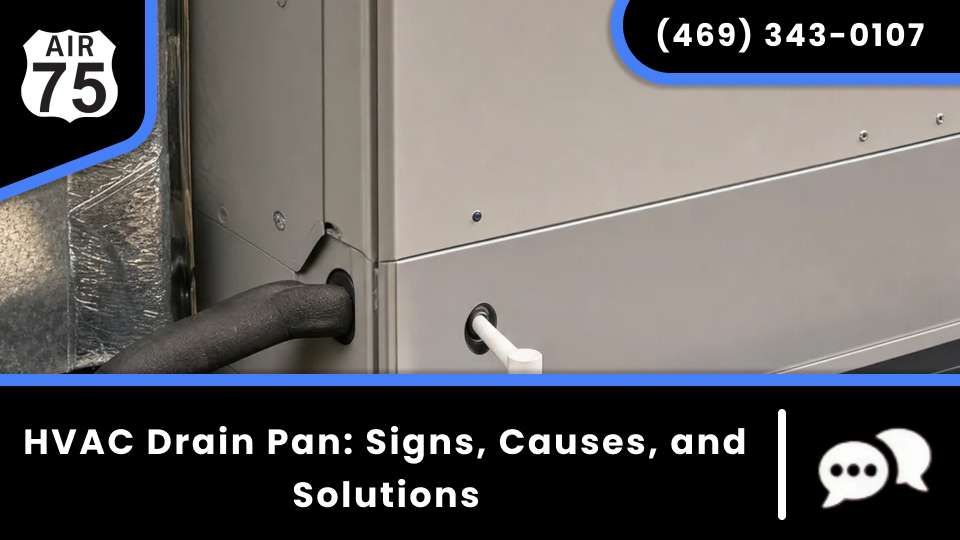
Generally, your HVAC drain pan collects the condensation that your cooling system produces each day. Typically, the AC drain pan sits beneath the evaporator coil and channels water outside. Meanwhile, a clogged drain pan or an overflowing drain pan can flood the surrounding floor. Similarly, a rusted drain pan or a cracked drain pan lets water escape through tiny gaps. Additionally, a drain pan float switch shuts the unit off before a secondary drain pan overflows. Therefore, homeowners searching for HVAC drain pan repair near you want fast, reliable help. Consequently, our team also serves anyone typing HVAC drain pan repair near me into a browser.
What an HVAC Drain Pan Does
Generally, your AC drain pan sits directly under the evaporator coil inside the air handler. Consequently, it catches every drop of condensation that the cooling process creates. Therefore, the pan keeps that water away from your floor, insulation, and framing. Moreover, a working pan sends the moisture toward the drain line and outside.
Where the AC Drain Pan Sits
Typically, the AC drain pan rests in one of two spots inside your system. Specifically, horizontal units use a primary pan plus a secondary drain pan under the coil. Additionally, vertical units place the pan beneath the coil in a single tray. Thus, the location shapes how you inspect and clean it.
How Condensation Moves Through It
Naturally, warm indoor air passes over the cold evaporator coil during every cooling cycle. As a result, moisture condenses on the coil and drips into the pan below. Subsequently, gravity pulls that water toward a small drain opening. Finally, the drain line carries it safely out of your home.
Common Signs of a Failing AC Drain Pan
Ultimately, a failing pan shows clear warning signs long before major damage appears. Notably, you might spot water, smells, or higher humidity near the indoor unit. Therefore, quick attention to an AC drain pan saves you from costly repairs.
Water Pooling Around the AC Drain Pan
Often, standing water around the air handler points to a clogged drain pan or blockage. Meanwhile, an overflowing drain pan spills onto the floor and soaks nearby materials. Consequently, you should wipe the area and watch for repeat pooling. Instead of ignoring it, call a technician quickly.
Musty Odors and Mold
Frequently, trapped water in the pan grows mold and spreads a musty smell. Additionally, that odor travels through your ducts into every room. Moreover, mold near the coil can worsen allergies for your family. Therefore, address any smell before it spreads further.
Why an AC Drain Pan Clogs
Regularly, dust and biological growth combine to block the drain and the pan. Specifically, a clogged drain pan traps water that should flow to the drain line. Hence, the AC drain pan overflows once the blockage grows large enough.
Algae, Dust, and Debris Buildup
Typically, algae thrives in the warm, damp environment inside the drain line. Furthermore, dust from your air filter settles into the pan over time. As a result, this sludge hardens and chokes the narrow drain opening. Clearly, routine cleaning prevents most cases of a clogged drain pan.
Rust and Cracks in the Pan
Eventually, older metal pans corrode after years of constant contact with water. Notably, a rusted drain pan develops pinholes that leak onto the ceiling below. Similarly, a cracked drain pan splits along stress points and drips steadily. Therefore, inspect the AC drain pan surface for damage each season.
How a Rusted Drain Pan Forms
Generally, standing water and trapped debris speed up corrosion on metal pans. Consequently, a rusted drain pan develops as rust eats through the thin metal and creates slow leaks. Meanwhile, replacement pans made of plastic resist this problem for many years.
When a Cracked Drain Pan Needs Replacement
Occasionally, a plastic pan cracks from age, heat, or a rough cleaning tool. Therefore, a small crack still lets enough water escape to stain drywall. Accordingly, most technicians swap a cracked pan rather than patch it. Ultimately, a fresh pan restores full protection.
The Role of the Drain Pan Float Switch
Importantly, a drain pan float switch acts as your last line of defense. Specifically, this small sensor detects rising water in the AC drain pan. Consequently, it cuts power to the system before an overflow reaches your floor. Therefore, this simple device prevents thousands of dollars in water damage.
How the Secondary Drain Pan Protects Your Ceiling
Typically, attic units rest above a secondary drain pan that catches any overflow. Moreover, this backup pan links to a separate drain or the float switch. As a result, it stops leaks from soaking the ceiling under your attic. Naturally, technicians check both pans during every tune-up.
Fixing and Preventing HVAC Drain Pan Problems
First, a technician clears the drain line and flushes the HVAC drain pan completely. Second, the crew checks the float switch and confirms the pan drains freely. Third, regular maintenance keeps the whole system clean and dry all summer. For example, the ASHRAE standards guide much of this preventive work across the industry.
Cleaning the AC Drain Pan Safely
Generally, turn off the power before you reach into the AC drain pan. Subsequently, remove standing water with a wet vacuum or thick towels. Additionally, wipe the pan and pour a vinegar solution down the drain. Finally, restore power and confirm smooth drainage.
When to Call a Professional
Occasionally, a stubborn clog or a leak resists every do-it-yourself effort. Therefore, a trained technician brings the tools to clear deep blockages fast. Moreover, professionals spot rust, cracks, and float switch faults that owners miss. Thus, expert service protects your home and your equipment.
Choosing Reliable AC Drain Pan Repair
Naturally, you want a repair team that arrives fast and fixes the problem right. Specifically, look for licensed technicians who understand the full AC drain pan system. Furthermore, honest companies explain the cause and show you the worn parts. Therefore, the right choice saves money and prevents repeat leaks.
What Professional Service Includes
Typically, a complete visit covers cleaning, inspection, and float switch testing. Moreover, the technician checks the pan, the drain line, and the coil together. As a result, you gain a system that stays dry through the hottest months. Ultimately, thorough service extends the life of your equipment.
Stop HVAC Drain Pan Damage Before It Floods Your Home
Ultimately, a small leak today can turn into major water damage tomorrow. Therefore, regular inspections keep your HVAC drain pan clean, sealed, and reliable. Moreover, our licensed team fixes clogs, rust, cracks, and faulty float switches fast. Therefore, contact Air75 HVAC for HVAC drain pan repair near you today.
Phone: (469) 343-0107
Email: info@air75hvac.com
Website: https://www.air75hvac.com/