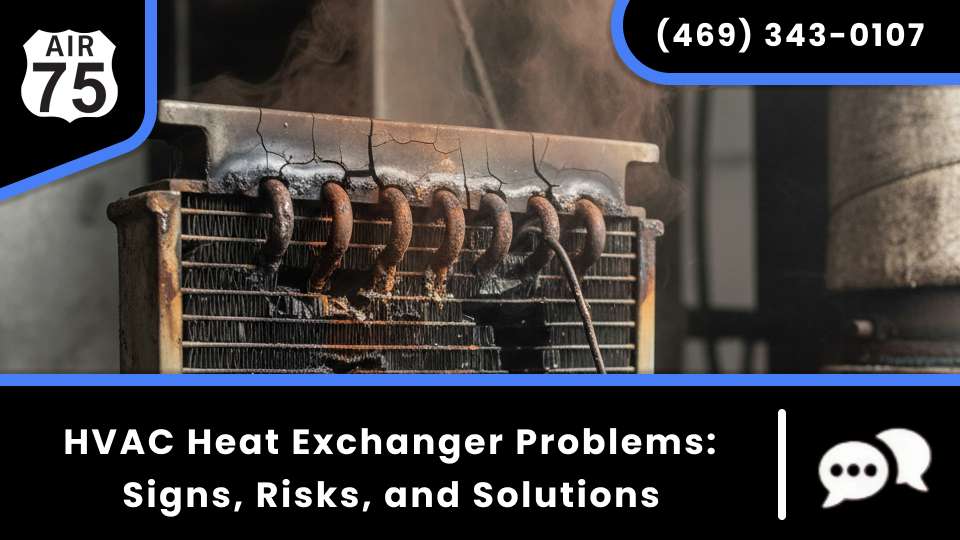
HVAC heat exchanger problems pose the most serious safety risk of any furnace component because a cracked exchanger can leak carbon monoxide into your home. Identifying furnace heat exchanger issues early protects your family from invisible poisonous gas exposure while preventing an expensive emergency replacement. A cracked heat exchanger allows combustion gases to mix with the air circulating through your home creating a dangerous health hazard. Furthermore, a heat exchanger crack develops silently over years of thermal stress and may not produce symptoms until the damage is severe. Heat exchanger replacement is one of the most expensive furnace repairs but is essential when cracks compromise the barrier between combustion gases and your breathing air. In addition, knowing when to replace a heat exchanger helps you decide between exchanger replacement and full furnace replacement based on the age of your system. Heat exchanger inspection during maintenance catches cracks.
Likewise, having a technician inspect your heat exchanger every fall before heating season provides the peace of mind that your furnace is operating safely. If your carbon monoxide detector alarms or you smell unusual odors from your vents, search for HVAC heat exchanger problems near you immediately.
What a Heat Exchanger Does
The heat exchanger is a set of metal chambers or tubes inside your furnace that transfers heat from burning fuel to your indoor air without allowing the combustion gases to contact the air you breathe. Specifically, understanding this critical function helps you recognize why HVAC heat exchanger problems are so dangerous.
Here is how the heat exchanger works:
- The burner ignites fuel inside the combustion chamber creating hot gases
- Hot combustion gases flow through the metal heat exchanger chambers
- The blower fan pushes indoor air across the outside surface of the hot exchanger
- Heat transfers through the metal walls warming the indoor air
- The warmed air continues through the ductwork into your living spaces
- Combustion gases exit safely through the flue pipe to the outdoors
Because the heat exchanger is the only barrier between poisonous combustion gases and your breathing air, any crack or hole in this component creates an immediate safety concern. Therefore, furnace heat exchanger issues require urgent professional attention.
Signs of HVAC Heat Exchanger Problems
Furnace heat exchanger issues produce specific warning signs that homeowners should never ignore. Furthermore, some of these signs indicate immediate danger requiring the furnace to be shut off.
Here are the most common signs of HVAC heat exchanger problems:
- Carbon monoxide detector activates while the furnace is running
- Also, a strong unusual chemical smell coming from the supply vents during heating
- Furthermore, visible soot or carbon buildup inside the furnace cabinet
- Yellow or flickering burner flames instead of steady blue flames
- Additionally, family members experiencing headaches, nausea, or dizziness when the furnace runs
- Water pooling at the base of the furnace from condensation through cracks
- The furnace shuts down frequently due to safety limit switches tripping
- Finally, visible cracks or corrosion on the heat exchanger surface during inspection
A cracked heat exchanger may produce no obvious symptoms in the early stages. Consequently, annual heat exchanger inspection is the only reliable way to detect cracks before they cause carbon monoxide exposure.
What Causes Heat Exchanger Problems
Several factors cause furnace heat exchanger issues to develop over time. Specifically, understanding these causes helps you extend exchanger life and prevent premature failure.
Thermal stress and metal fatigue The heat exchanger expands when hot and contracts when cool during every heating cycle. Furthermore, thousands of expansion and contraction cycles over the furnace lifespan cause metal fatigue that eventually produces cracks. In addition, this is the most common cause of a heat exchanger crack in furnaces older than 15 years.
Overheating from restricted airflow Dirty air filters, blocked return vents, and closed registers restrict airflow which causes the heat exchanger to overheat. Consequently, excessive heat accelerates metal fatigue and causes cracks to develop years ahead of the expected lifespan. Furthermore, a furnace that overheats repeatedly from restricted airflow is at high risk for exchanger failure.
Corrosion from combustion byproducts Combustion creates moisture and acidic byproducts that corrode the metal from the inside. Furthermore, high-efficiency furnaces produce more condensation which accelerates internal corrosion if the condensate system does not drain properly.
Improper furnace sizing An oversized furnace short cycles which subjects the heat exchanger to more expansion and contraction cycles than normal operation. Furthermore, the rapid temperature swings from short cycling increase thermal stress significantly.
Lack of maintenance Furnaces that do not receive annual maintenance develop conditions that stress the heat exchanger including dirty burners, restricted airflow, and improper gas pressure. Furthermore, skipping annual heat exchanger inspection allows cracks to go undetected until carbon monoxide exposure occurs.
Heat Exchanger Inspection
Heat exchanger inspection during annual maintenance is the most important safety check your furnace receives. Furthermore, having a technician inspect your heat exchanger catches cracks that are invisible to homeowners.
What professional inspection involves:
- Visual examination of all accessible heat exchanger surfaces for cracks and corrosion
- Also, camera inspection using a borescope inserted into the exchanger chambers
- Furthermore, combustion analysis testing for carbon monoxide levels in the flue gases
- Flame pattern observation to detect airflow through cracks that disturb the burner flame
- Additionally, testing for elevated carbon monoxide in the supply air during operation
A thorough heat exchanger inspection takes 30 to 60 minutes and is typically included in annual furnace maintenance visits costing between 80 and 150 dollars. Consequently, this affordable inspection is the best protection against the carbon monoxide risk that a cracked heat exchanger creates.
Heat Exchanger Replacement Options
Heat exchanger replacement becomes necessary when cracks are confirmed and the furnace cannot operate safely. Furthermore, knowing when to replace a heat exchanger versus replacing the entire furnace saves you from making the wrong investment.
Heat exchanger only replacement:
- Costs between 1,500 and 3,500 dollars including parts and labor
- Makes sense when the furnace is less than 10 years old and otherwise in good condition
- Requires several hours of labor to disassemble and reassemble the furnace
- Includes a new warranty on the replacement exchanger
Full furnace replacement:
- Costs between 3,000 and 7,000 dollars installed
- Makes more financial sense when the furnace is over 15 years old
- Provides a complete new warranty on all components
- Includes efficiency upgrades that reduce heating costs
If your furnace is more than 15 years old, full replacement typically provides better value than exchanger replacement alone. Consequently, your technician can help you compare total cost of ownership for both options.
When to Call a Professional
Heat exchanger problems are a safety emergency that requires immediate professional attention. Therefore, contact a technician for HVAC heat exchanger problems near you if any of the following apply:
- Your carbon monoxide detector activates while the furnace is running
- Family members experience headaches or nausea when the heat is on
- You see yellow flickering flames instead of steady blue at the burner
- Soot is visible inside the furnace cabinet or on the supply registers
- The furnace trips the safety limit switch and shuts down repeatedly
- Your furnace is over 15 years old and has never had an exchanger inspection
An HVAC heat exchanger problems expert near you performs a complete combustion analysis, camera inspection, and safety evaluation to determine whether your exchanger is safe. Specifically, they test for carbon monoxide in the supply air and flue gases and visually confirm the condition of every exchanger surface. In addition, they recommend repair or replacement based on the crack severity and furnace age.
Do not run a furnace with a suspected cracked heat exchanger. Instead, call today to schedule your safety inspection and protect your family from carbon monoxide exposure.
Phone: (469) 343-0107
Email: info@air75hvac.com
Website: https://www.air75hvac.com/