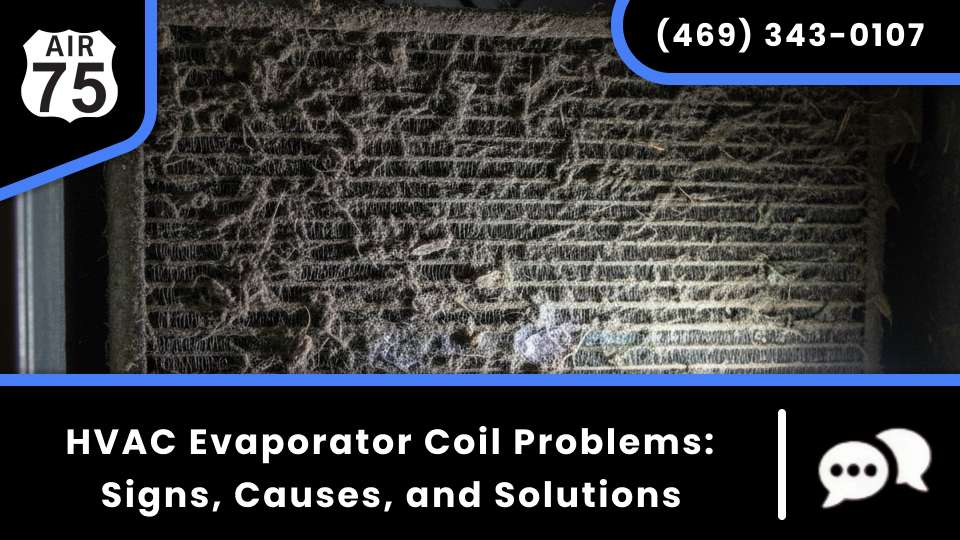
HVAC evaporator coil problems reduce your cooling capacity, increase energy bills, and can shut down your entire air conditioning system. Identifying AC evaporator coil issues early prevents compressor damage and keeps your home comfortable during the hottest months. A frozen evaporator coil blocks airflow completely and forces your system to work harder while delivering less cooling. Furthermore, an evaporator coil freezing up indicates an underlying problem that will damage your compressor if left unaddressed. A dirty evaporator coil insulates the coil surface and prevents it from absorbing heat from your indoor air. In addition, a clogged evaporator coil reduces system efficiency by up to 40 percent while your energy bills climb steadily higher. Evaporator coil replacement becomes necessary when the coil develops refrigerant leaks that cannot be repaired cost effectively.
Likewise, knowing when to replace an evaporator coil helps you decide between repair and replacement before spending money on a failing component. If your AC runs constantly but your home stays warm, search for HVAC evaporator coil problems near you to get a professional diagnosis.
What the Evaporator Coil Does
The evaporator coil is the component inside your air handler that absorbs heat from your indoor air to cool your home. Specifically, understanding how it works helps you recognize when HVAC evaporator coil problems are developing.
Here is how the evaporator coil functions:
- Cold liquid refrigerant flows into the coil from the expansion valve
- Warm indoor air passes over the cold coil surface pulled by the blower fan
- The refrigerant absorbs heat from the air and evaporates into a gas
- The cooled air continues through the ductwork and into your living spaces
- Moisture from the air condenses on the cold coil surface and drips into the drain pan
- The warm refrigerant gas travels to the outdoor unit where the condenser releases the heat
Because the evaporator coil handles both cooling and dehumidification, any problem with the coil affects your comfort dramatically. Therefore, AC evaporator coil issues are among the most impactful HVAC failures homeowners experience.
Signs of HVAC Evaporator Coil Problems
AC evaporator coil issues produce specific symptoms that help you identify the problem quickly. Furthermore, catching these signs early prevents compressor damage that costs thousands to repair.
Here are the most common signs of HVAC evaporator coil problems:
- The AC runs continuously but your home does not reach the set temperature
- Also, warm air blows from the supply vents despite the system running
- Furthermore, ice forms on the refrigerant lines or visible portions of the coil
- Higher than normal humidity levels inside your home despite the AC running
- Additionally, water pooling around the indoor air handler from excessive condensation or ice melt
- Unusual hissing or bubbling sounds from inside the air handler
- Energy bills increase significantly without changes in usage or thermostat settings
- Finally, a musty or moldy smell coming from the supply vents
A frozen evaporator coil is one of the most visible symptoms because ice buildup on the refrigerant lines is easy to spot. Consequently, if you see frost or ice on any part of the indoor system, turn the AC off immediately and call for service.
What Causes HVAC evaporator coil problems
A frozen evaporator coil results from conditions that disrupt the balance between airflow and refrigerant temperature. Furthermore, an evaporator coil freezing up always indicates an underlying problem that needs correction.
Restricted airflow A dirty air filter, blocked return vents, or collapsed ductwork reduces the warm air flowing over the coil. Consequently, without enough warm air the coil temperature drops below freezing and moisture on the surface turns to ice. Furthermore, restricted airflow is the most common cause of evaporator coil freezing up.
Low refrigerant charge Refrigerant leaks reduce the pressure in the coil causing the remaining refrigerant to expand more and drop to extremely low temperatures. As a result, the coil freezes even with adequate airflow. In addition, low refrigerant indicates a leak that must be found and repaired.
Blower motor failure A failing blower motor that runs at reduced speed delivers insufficient air across the coil. Furthermore, a motor that shuts off intermittently allows the coil to freeze during periods without airflow.
Dirty evaporator coil A clogged evaporator coil covered in dust and debris acts as insulation between the refrigerant and the air. Consequently, the coil cannot absorb heat efficiently and the surface temperature drops below freezing. Furthermore, a dirty evaporator coil compounds airflow problems because the buildup also restricts air passage through the fins.
What Causes a Dirty Evaporator Coil
A dirty evaporator coil develops gradually from airborne particles that bypass the filter. Furthermore, a clogged evaporator coil reduces cooling performance long before it causes freezing.
Inadequate filtration Air filters that are too thin, the wrong size, or not changed regularly allow dust to reach the coil. Furthermore, running the system without a filter even briefly deposits significant debris on the wet coil surface where it adheres permanently.
Moisture and biological growth The coil surface stays wet during operation creating ideal conditions for mold, mildew, and bacteria. Consequently, biological growth on the coil reduces heat transfer and creates the musty smell that comes from the vents. In addition, organic buildup on a dirty evaporator coil is harder to clean than dust alone.
Construction or renovation dust Home construction, remodeling, and drywall work generate fine particles that overwhelm standard filters. Furthermore, these particles coat the coil quickly and require professional cleaning to remove.
Evaporator Coil Cleaning and Repair
Professional cleaning restores a dirty evaporator coil to full performance. Furthermore, repair options depend on whether the coil is simply dirty or has developed refrigerant leaks.
Professional coil cleaning A technician accesses the coil inside the air handler, applies a specialized coil cleaner, and rinses the debris from the fins. Furthermore, professional cleaning costs between 100 and 400 dollars depending on coil accessibility. In addition, annual coil cleaning prevents the buildup that causes freezing and efficiency loss.
Refrigerant leak repair Small leaks in the evaporator coil can sometimes be repaired with solder or epoxy. However, the coil must be accessed, leak-tested, repaired, evacuated, and recharged with refrigerant. Furthermore, leak repair costs between 300 and 1,000 dollars depending on the leak location.
Evaporator coil replacement When the coil has multiple leaks, severe corrosion, or damage beyond repair, evaporator coil replacement is the best option. Furthermore, knowing when to replace an evaporator coil prevents spending money on repeated leak repairs. In addition, replacement costs between 1,000 and 2,500 dollars including the coil, refrigerant, and labor. However, if your system is more than 15 years old, full system replacement may provide better value than coil replacement alone.
When to Call a Professional
Evaporator coil work requires accessing sealed components and handling refrigerant. Therefore, contact a technician for HVAC evaporator coil problems near you if any of the following apply:
- Ice forms on the refrigerant lines or indoor unit
- The AC runs but delivers warm air or cannot reach the set temperature
- Water pools around the indoor air handler
- You smell mold or mildew from the supply vents
- Energy bills have increased without explanation
- The system is more than five years old and has never had a coil cleaning
An HVAC evaporator coil problems expert near you inspects the coil condition, tests refrigerant levels, checks airflow, and determines whether cleaning, repair, or replacement is needed. Specifically, they use temperature and pressure measurements to diagnose the exact problem. In addition, they verify the blower motor, filter, and ductwork are supporting proper coil operation.
Do not let a failing evaporator coil destroy your compressor and leave you without cooling. Instead, call today to schedule your coil inspection and restore full cooling performance to your home.
Phone: (469) 343-0107
Email: info@air75hvac.com
Website: https://www.air75hvac.com/