HVAC contactor problems prevent your air conditioner from starting, cause it to run continuously without stopping, or create electrical arcing that damages other components. Identifying AC contactor issues early prevents compressor damage and keeps your system responding properly to thermostat signals. A bad HVAC contactor cannot complete the electrical circuit that powers your compressor and condenser fan when the thermostat calls for cooling. Furthermore, a failing AC contactor delivers inconsistent power that causes the outdoor unit to hesitate, chatter, or cycle erratically. HVAC contactor replacement restores reliable electrical switching and eliminates the startup failures that leave your home without cooling on the hottest days. In addition, knowing when to replace an AC contactor prevents you from paying for unnecessary compressor or capacitor repairs when the contactor was the actual problem. Recognizing HVAC contactor symptoms helps you act before a weak contactor causes expensive secondary damage to your system.
Likewise, knowing the HVAC contactor symptoms and signs of a bad AC contactor saves you from misdiagnosing the problem as a thermostat, capacitor, or compressor failure. If your outdoor unit hums but does not start or runs nonstop, search for HVAC contactor problems near you to get a fast professional diagnosis.
What an HVAC Contactor Does
An HVAC contactor is an electrically controlled switch that connects and disconnects power to your compressor and condenser fan motor. Specifically, understanding how contactors work helps you recognize when HVAC contactor problems are developing as well as the HVAC contactor symptoms.
Here is how the contactor functions in your system:
- The thermostat sends a low-voltage signal to the contactor when cooling is needed
- The signal energizes an electromagnetic coil inside the contactor
- The coil pulls down a metal plate that bridges two sets of electrical contacts
- This bridge completes the high-voltage circuit that powers the compressor and condenser fan
- When the thermostat stops calling for cooling the coil releases and the contacts separate
- The contactor switches on and off every cooling cycle multiple times per day
Because the contactor handles high-voltage switching under heavy electrical load during every cycle, the contact surfaces gradually burn and pit from electrical arcing. Therefore, contactors are one of the most common HVAC components to fail from normal wear.
Signs of HVAC Contactor Problems
HVAC contactor symptoms are distinctive and help you identify the problem quickly. Furthermore, recognizing the signs of a bad AC contactor prevents you from running the system in a damaged state.
Here are the most common signs of HVAC contactor problems:
- The outdoor unit does not start when the thermostat calls for cooling
- Also, the outdoor unit hums or buzzes but the compressor and fan do not engage
- Furthermore, the system runs continuously and never shuts off even after reaching the set temperature
- A chattering or clicking sound comes from the outdoor unit during startup
- Additionally, the outdoor unit starts intermittently working sometimes but not others
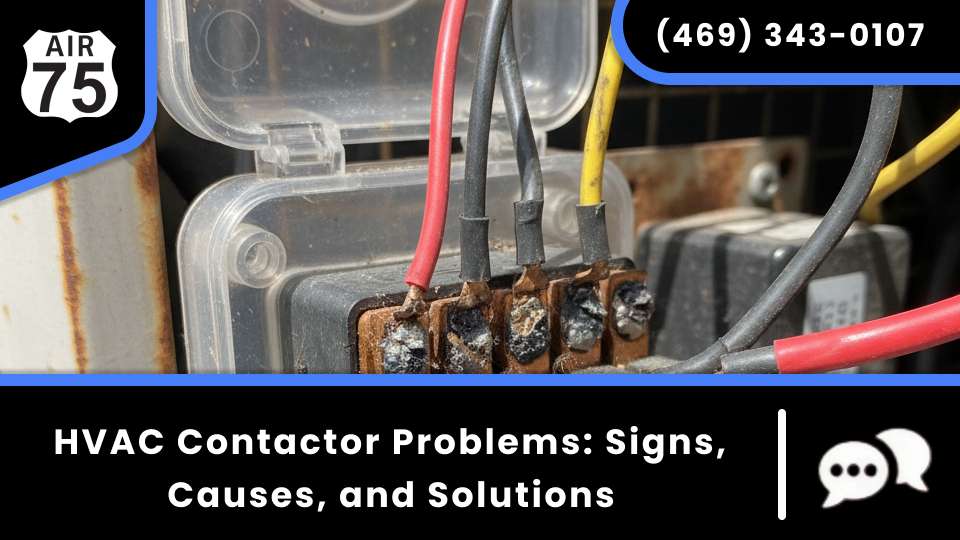
- Visible pitting, burning, or discoloration on the contactor contact surfaces
- The contactor plate appears stuck in the closed position
- Finally, the system trips the circuit breaker during startup attempts
A bad HVAC contactor that sticks in the closed position keeps the compressor running nonstop because it cannot disconnect power when the thermostat signal stops. Consequently, a system that never shuts off often indicates a welded contactor rather than a thermostat problem.
What Causes Problems
Several factors cause AC contactor issues to develop. Specifically, understanding these causes helps you extend contactor life and recognize developing problems.
Electrical arcing and pitting Every time the contactor closes and opens, a small electrical arc forms across the contact surfaces. Furthermore, thousands of cycles per cooling season gradually burn and pit the contact surfaces reducing their ability to make clean electrical connections. In addition, this normal wear is the most common cause of HVAC contactor problems.
Insect and debris contamination Ants, spiders, and other insects are attracted to the electromagnetic field and nest inside the contactor. Consequently, insect bodies bridge electrical contacts and cause short circuits or prevent the contactor from closing properly. Furthermore, a failing AC contactor sometimes contains visible ant colonies when opened for inspection.
Coil failure The electromagnetic coil that pulls the contactor closed can burn out from voltage spikes, overheating, or age. As a result, the contactor cannot close even when the thermostat sends the signal. Furthermore, coil failure prevents the entire outdoor unit from operating.
Power surges Lightning strikes and utility grid fluctuations damage contactor coils and weld contact surfaces together. Consequently, a power surge can cause the contactor to either fail open or fail closed depending on the surge severity. Furthermore, a surge protector on your HVAC system prevents most electrical damage.
Excessive cycling A system that short cycles puts the contactor through far more open-close cycles than normal operation requires. Furthermore, each additional cycle adds wear to the contact surfaces and shortens contactor lifespan significantly.
HVAC Contactor Replacement
HVAC contactor replacement is a straightforward repair when there are AC contactor issues that restores reliable electrical switching. Furthermore, knowing when to replace an AC contactor and what the process involves helps you plan the service.
When replacement is necessary:
- The contact surfaces are visibly pitted, burned, or discolored
- Also, the contactor plate is stuck and does not release when power is removed
- Furthermore, the system does not start despite power reaching the outdoor unit
- The contactor chatters or buzzes without fully engaging
- Additionally, the electromagnetic coil tests open on a multimeter indicating burnout
What professional replacement involves:
- The technician shuts off power to the outdoor unit at the disconnect
- They photograph the wiring connections for correct reinstallation
- They disconnect the wires and remove the old contactor from the mounting bracket
- They install a new contactor with the correct voltage and amperage rating
- They reconnect all wires in the correct configuration
- Finally, they test the system through a complete cooling cycle verifying proper engagement and disengagement
HVAC contactor replacement costs between 100 and 250 dollars including parts and labor. Furthermore, the contactor itself costs between 15 and 45 dollars while labor accounts for the remainder. Consequently, this is one of the most affordable HVAC repairs that restores full system operation.
How to Prevent HVAC Problems
Preventing contactor failure extends the life of your entire cooling system. Furthermore, most AC contactor issues are preventable with proper maintenance and protection.
Here are effective ways to prevent HVAC contactor problems:
- Schedule annual professional maintenance that includes contactor inspection and cleaning
- Also, install a surge protector on your HVAC system to prevent electrical damage
- Furthermore, keep the outdoor unit clear of debris and vegetation that harbors insects
- Apply insect deterrent around the outdoor unit to prevent ant infestations
- Additionally, address short cycling immediately to reduce excessive contactor wear
- Replace the contactor proactively during major service if it shows early signs of pitting
- Finally, ensure the system is properly sized to avoid unnecessary cycling
These preventive steps protect your contactor from the electrical wear, insect contamination, and power surges that cause premature failure. Consequently, a well-maintained contactor lasts 5 to 10 years before needing replacement.
When to Call a Professional
Contactor work involves high-voltage components that can cause serious injury or death. Therefore, contact a technician for HVAC contactor problems near you if any of the following apply:
- Your outdoor unit does not start when the thermostat calls for cooling
- The system runs continuously and never shuts off
- You hear chattering, clicking, or buzzing from the outdoor unit
- The circuit breaker trips when the system attempts to start
- You suspect insect contamination inside the electrical panel
- You want a contactor inspection during routine maintenance
An HVAC contactor problems expert near you tests the contactor, verifies the coil, inspects the contact surfaces, and replaces the failed component with the correct rated part. Specifically, they check all electrical connections and test the full system before leaving. In addition, they identify any compressor or capacitor damage caused by the failed contactor.
Do not let a cheap contactor failure destroy your expensive compressor. Instead, call today to schedule your contactor diagnosis and restore reliable cooling to your home.
Phone: (469) 343-0107
Email: info@air75hvac.com
Website: https://www.air75hvac.com/