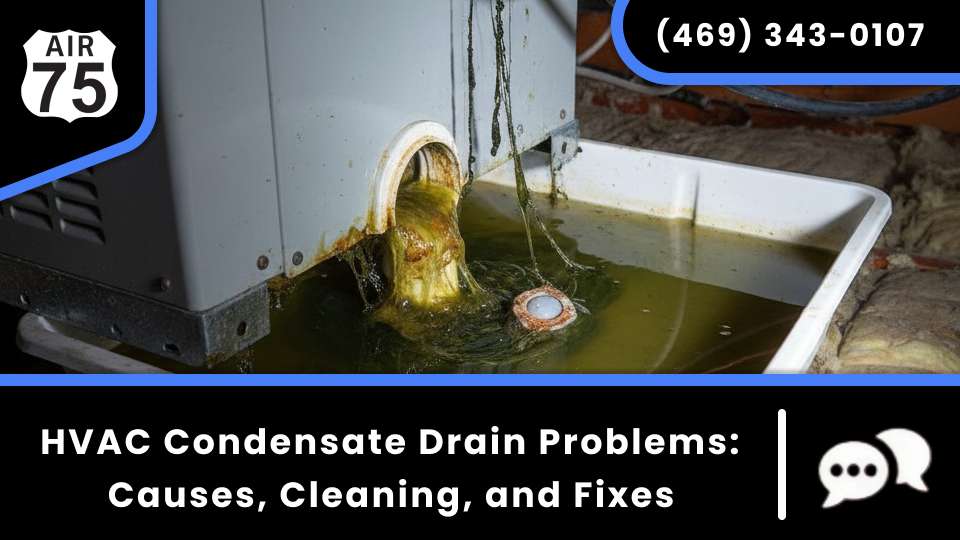
HVAC condensate drain problems cause water leaks, mold growth, and system shutdowns that leave your home without cooling when you need it most. Identifying AC condensate drain issues early prevents water damage to your ceilings, walls, and floors. A clogged condensate drain is the number one cause of water pooling around your indoor HVAC unit. Furthermore, a blocked AC drain line forces water to back up into the drain pan where it overflows onto your floor or into your ceiling. Condensate drain cleaning removes the algae, mold, and debris that accumulate inside the drain line over time. In addition, knowing how to flush your AC drain line as part of regular maintenance prevents clogs from forming in the first place. Condensate drain overflow triggers your system’s safety switch and shuts down your air conditioner completely.
Likewise, an AC drain pan overflowing or in other terms condensate drain overflow means water has nowhere to go and is actively damaging your home. If water is pooling around your HVAC unit, search for HVAC condensate drain problems near you to get professional help fast.
How Your HVAC Condensate Drain Works
Your air conditioner removes moisture from the air as a natural part of the cooling process to prevent condensate drain overflow. Specifically, understanding how the condensate system works helps you recognize when something goes wrong.
Here is how the condensate drain system operates:
- Warm humid air passes over the cold evaporator coil inside your air handler
- Moisture in the air condenses on the coil surface like water on a cold glass
- Water drips from the coil into a drain pan positioned below
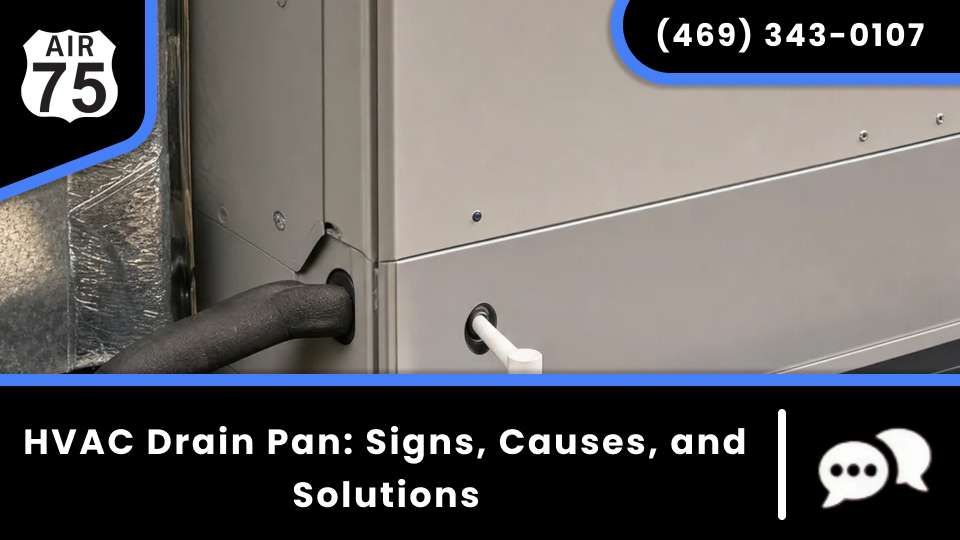
- The drain pan connects to a PVC drain line that carries water outside or to a floor drain
- A secondary drain pan or safety switch provides backup protection if the primary drain clogs
- The system removes between 5 and 20 gallons of water per day depending on humidity levels
Because this system handles significant water volume during cooling season, any blockage causes problems quickly. Therefore, keeping the drain line clear is one of the most important HVAC maintenance tasks.
Common Causes of HVAC Condensate Drain Problems
AC condensate drain issues develop from biological growth, debris, and installation problems and lead to condensate drain overflow. Furthermore, most HVAC condensate drain problems are preventable with regular maintenance.
Algae and mold growth The warm moist environment inside the drain line creates ideal conditions for algae and mold. Consequently, biological growth builds up inside the pipe and gradually restricts water flow. Furthermore, a clogged condensate drain from algae is the most common reason for drain line failure.
Dust and debris Dust from the air stream collects on the wet evaporator coil and washes into the drain pan. As a result, this sludge accumulates in the drain line and combines with algae to form a thick blockage. Moreover, a dirty air filter accelerates debris buildup in the drain system.
Rust and corrosion Metal drain pans corrode over time and rust particles clog the drain line opening. Furthermore, corroded pans develop holes that allow water to leak directly onto the floor or ceiling below.
Improper installation Drain lines that lack proper slope, have too many bends, or use undersized pipe restrict water flow. In addition, a blocked AC drain line sometimes results from installation errors that trap air in the pipe and prevent proper drainage.
Disconnected or cracked drain line PVC drain lines can crack from impact, vibration, or age. Consequently, water leaks from the crack before reaching the exterior drain point. Furthermore, pipe joints that were never glued properly separate over time and create leaks.
Signs of a Clogged Condensate Drain
A clogged condensate drain produces clear warning signs that homeowners can identify quickly. Furthermore, catching these signs early prevents water damage and system shutdowns.
Here are the most common signs of a blocked AC drain line:
- Water pooling around the base of your indoor HVAC unit
- Also, water dripping from the ceiling below a ceiling-mounted air handler
- Furthermore, your air conditioner shuts off unexpectedly and the drain pan is full
- A musty or moldy smell coming from the supply vents or around the unit
- Additionally, the AC runs but cooling performance drops noticeably
- Higher than normal humidity levels inside your home despite the AC running
- Finally, a wet or water-stained area on the wall near where the drain line exits
If your AC shuts off and you find standing water in the drain pan, a clogged condensate drain is almost certainly the cause. Consequently, do not restart the system until the drain is cleared because the water has nowhere to go.
How to Clean Your HVAC Condensate Drain
Condensate drain cleaning is straightforward and prevents the most common HVAC condensate drain problems. Furthermore, knowing how to flush your AC drain line saves you from emergency service calls during peak cooling season.
Step 1: Turn off the system First, shut off your air conditioner at the thermostat and the breaker panel. Specifically, never work on the drain system while the unit is running.
Step 2: Locate the drain line Next, find the PVC drain line connected to the drain pan inside or below your air handler. Furthermore, locate the access point which is typically a T-shaped fitting with a removable cap.
Step 3: Inspect the drain pan Then, check the drain pan for standing water and debris. In addition, use a wet/dry vacuum to remove standing water and sludge from the pan.
Step 4: Flush the drain line After clearing the pan, pour a cup of distilled white vinegar or a commercial drain treatment into the access point. Consequently, the solution kills algae and mold inside the line. Furthermore, wait 30 minutes then flush with warm water to push the debris through.
Step 5: Check the exterior drain Finally, go outside and verify water flows freely from the drain line exit point. However, if water does not flow after flushing, the blockage may require a wet/dry vacuum on the exterior end or professional snaking.
Repeat this condensate drain cleaning process every three months during cooling season. Therefore, quarterly maintenance prevents the buildup that causes clogs and overflow.
What to Do When Your Condensate Drain Overflows
Condensate drain overflow requires immediate action to prevent water damage and mold growth. Furthermore, an AC drain pan overflowing means the primary drain has failed completely.
Immediate steps:
- Turn off the air conditioner immediately at the thermostat and breaker
- Also, use towels or a wet/dry vacuum to remove standing water from the pan and floor
- Furthermore, check for water damage on the ceiling, walls, or floor below the unit
- Place a temporary container under the drain pan to catch any remaining drips
After stopping the overflow:
- Attempt to flush the drain line using the cleaning steps above
- Also, check the secondary drain line if your system has one
- Furthermore, inspect the drain pan for cracks or rust holes that need replacement
- Verify the safety float switch is working because it should have shut the system down
If the overflow caused water to reach your ceiling or walls, address the moisture immediately to prevent mold growth. Consequently, run fans and a dehumidifier in the affected area until everything is completely dry.
How to Prevent HVAC Condensate Drain Problems
Preventing drain problems keeps your system running without interruption. Furthermore, most AC condensate drain issues are completely preventable with simple maintenance.
Here are effective ways to prevent HVAC condensate drain problems:
- Flush the drain line with vinegar every three months during cooling season
- Also, change your air filter every one to three months to reduce debris in the drain system
- Furthermore, schedule annual professional HVAC maintenance that includes drain line cleaning
- Keep the area around your outdoor drain exit clear of dirt and debris
- Additionally, install a safety float switch if your system does not already have one
- Consider installing a drain line treatment tablet in the drain pan for continuous algae prevention
- Finally, inspect the drain pan annually for rust, cracks, or corrosion
These preventive steps cost almost nothing but prevent the water damage, mold growth, and system shutdowns that come from neglected drain lines.
When to Call a Professional for HVAC Condensate Drain Problems Near You
Some drain problems require professional tools and expertise. Therefore, contact a technician for HVAC condensate drain problems near you if any of the following apply:
- Flushing the drain line does not restore water flow
- Water has leaked onto your ceiling, walls, or flooring
- The drain pan is rusted through and needs replacement
- Your system shuts down repeatedly despite clearing the drain
- You smell mold from the vents or around the air handler
- The drain line needs rerouting or replacement due to installation defects
An HVAC condensate drain problems expert near you clears the blockage using professional tools, inspects the entire drain system, and identifies any damage that needs repair. Specifically, they use compressed air or specialized drain snakes to clear stubborn clogs that household methods cannot reach. In addition, they verify the safety switch, drain pan condition, and line slope before leaving.
Do not let a clogged drain line flood your home or shut down your cooling system. Instead, call today to schedule your drain line service and keep your AC running all summer.
Phone: (469) 343-0107
Email: info@air75hvac.com
Website: https://www.air75hvac.com/